About Us
CONNECT
We are four partners in the CONNECT project.
We are from…
– IES El Escorial in El Escorial, Spain
– Europaschule Ostendorf-Gymnasium in Lippstadt, Germany
– Udens College in Uden, Netherlands
– Almunge skola near Uppsala, Sweden
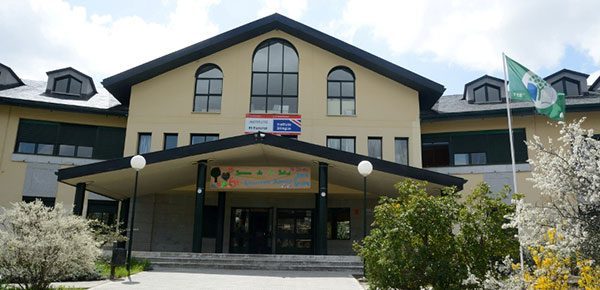
Spain
IES El Escorial in Madrid opened in 1998. The defining characteristics of our school are shaped by its status as a state school, the community it serves, the courses it offers, the layout of its facilities and the opportunities they provide, and the natural, social and cultural environment in which it is situated.
IES El Escorial offers compulsory secondary education (ESO) and non-compulsory secondary education: the Bachillerato and vocational training programmes, including both Basic Vocational Training and the Specialised Vocational Programme, as well as an intermediate-level course (Gardening and Floristry) and two advanced-level courses (Forest and Natural Environment Management, and Landscaping and Rural Environment).
The school is listed as one of the eight priority schools for pupils with mobility needs within the Western DAT.
In 2013, we joined the bilingual education programme in Year 1 of ESO, and by the 2016/17 academic year, this had been extended to all four years of the stage. In 2017/18, we began introducing bilingual studies into the Bachillerato
IES El Escorial is a medium-sized secondary school, but one that is highly diverse in terms of the subjects taught. It brings together a diverse student body from different backgrounds and with varied interests and educational needs, which requires the implementation of educational programmes designed to address or compensate for physical, intellectual, socio-economic and cultural inequalities.
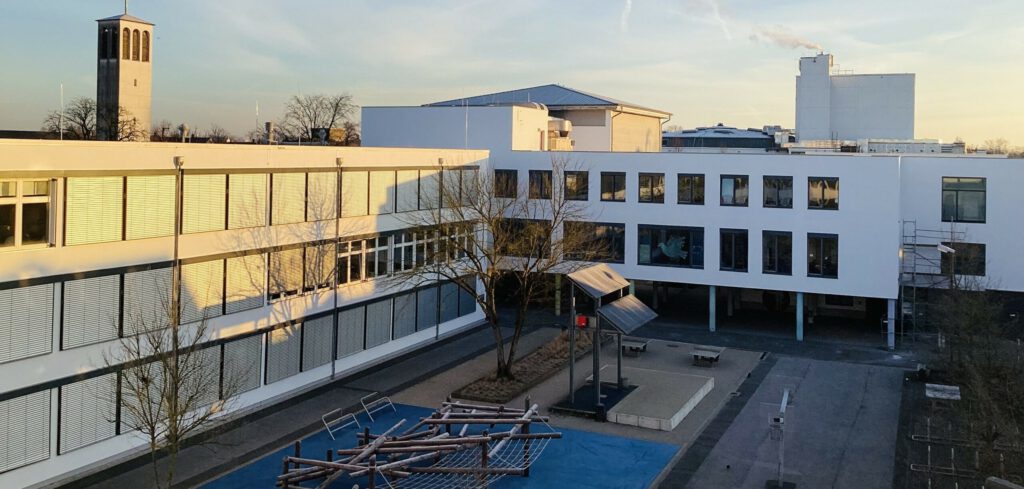
Germany
The Europaschule Ostendorf-Gymnasium is located in the mid-west of Germany in between Dortmund and Paderborn and provides general education in a local area. In August 2009 the school was awarded the title of “Europaschule”, which shows its commitment to the European idea. There are about 800 students and 70 teachers at our school. The students are between 10 and 18 years old.
At Ostendorf-Gymnasium, intercultural learning is an important part of school life and a central focus of our participation in the Erasmus project. Due to our diverse school community we have many personal contacts across Europa and beyond. We benefit from a strong dedication among students, parents and teachers to support exchanges and personal encounters in general and to work on European projects. The school also has bilingual classes, which could be helpful for the other schools when it comes to fostering language skills (exchange of teaching methods, job shadowing).
As a recognized Europaschule, we aim to prepare our students for life in a connected Europe. We would like our students to profit from becoming more independent and self-organized in a national and European context with conveying future literacy in a practical and student-oriented way.
As a consequence. intercultural learning at our school also goes beyond the classroom. Students collaborate in international projects, communicate with peers from other countries, and experience everyday school life in a different cultural context. This is why students are particularly requested to do their practical training abroad.These experiences help them develop openness, respect, and understanding for other perspectives.
Teachers also benefit from professional exchanges and cooperation with European partners, sharing ideas and innovative teaching methods. Together, we build a strong network that strengthens European values such as tolerance, cooperation, and mutual respect.
Through the Erasmus project, we are proud to be part of a great European learning community that connects people across borders and promotes lifelong intercultural understanding.
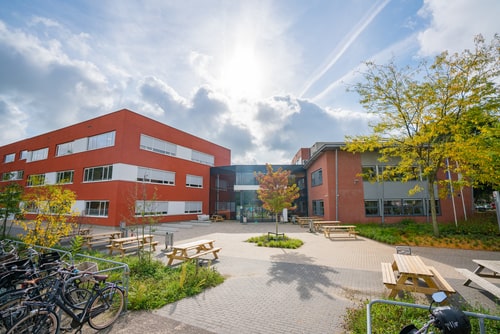
Netherlands
Uden is located in the province of North Brabant, one of the most innovative regions in the Netherlands. The region combines a strong industrial and service sector with a thriving high-tech economy and offers excellent educational and employment opportunities.
Udens College is a comprehensive secondary school offering education from vmbo-basis to gymnasium level. The school serves approximately 2,500 pupils across two locations. Our vocational department has about 1250 pupils and employs about 170 staff members. Our diverse pupil population reflects the international character of our region and includes pupils from a wide range of cultural and linguistic backgrounds.
At Udens College, we believe that every pupils should have the opportunity to develop their talents, ambitions and personal strengths. Our mission, “Ruimte voor ambitie” (“Room for Ambition”), reflects our commitment to providing pupils with the space and support they need to grow academically, socially and personally. Pupils are at the centre of everything we do. We encourage them to think critically, make informed choices and actively contribute to society.
To support this vision, we have developed our own educational concept: the Udens Model. Our school system ist best defined in 4 major cornerstones: This model combines high-quality education (curriculum) with personal coaching, opportunities for talent development and flexibility in learning pathways. Through individual and group coaching, pupils are guided in taking ownership of their learning process and personal development.
Udens College has a long history in international activities and in integrating the European dimension into the school curriculum. The school is one of 37 ELOS schools (Europe as a learning environment in schools) in the Netherlands, which promote European citizenship. The world and especially Europe is
getting smaller and international connections are intensifying. We thus must prepare future employees for this big challenge. So, the UC doesn‘t only focus on its region or province, the process is rather taking place in a lot of European countries, so we want to exchange experiences and learn from schools for a better educational system in Europe. Not only for ourselves but also for our pupils, who own the future.
Our schools reinvent themselves; changes are part of its development. As today‘s jobs change, the skills and competences needed for these future jobs are changing from today on. Employees of the future must be self-confident, cooperative, able to act independently, responsible, used to ICT, be innovative and creative both in thinking and problem solving. And the pupils must be able to speak
and understand English.
Internationalisation and world citizenship are important elements of our educational programme. As a member of the Global Citizen Network, Udens College actively promotes international awareness and intercultural understanding. Our pupils have opportunities to participate in exchanges, international projects and collaborative activities with partner schools across Europe. These experiences help them develop language skills, broaden their perspectives and prepare for an increasingly interconnected world.
Through international cooperation, we give our pupils the opportunity to work with pupils of their own age on meaningful projects related to global challenges, including the United Nations Sustainable Development Goals. By learning from one another and sharing experiences across borders, they develop the knowledge, skills and attitudes needed to become responsible global citizens.
At Udens College, we aim to prepare young people not only for further education and future careers, but also for active participation in a rapidly changing society.
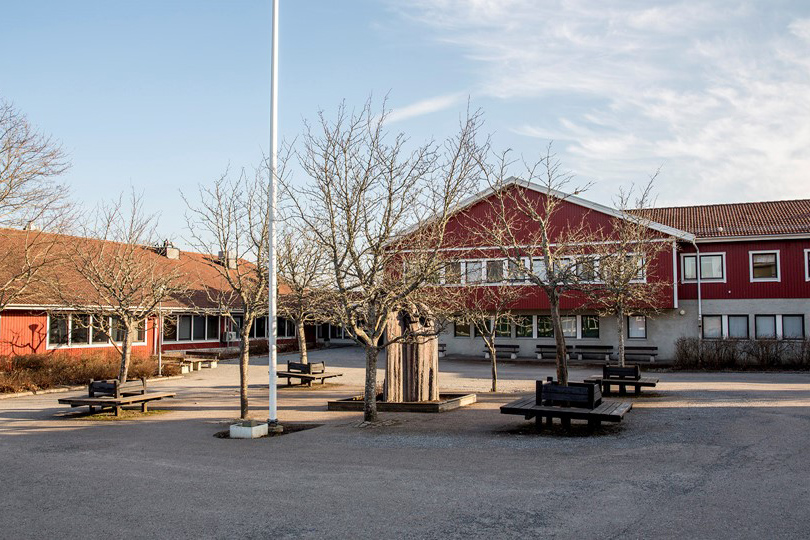
Sweden
Almunge skola is a small school situated in the countryside near the city of Uppsala in the mid-east
of Sweden. Uppsala has got the oldest university of Scandinavia and the educational level in the area
is quite high.
We have about 500 students from the age of 6-16 years. The teachers and the administration of the
school are very committed and we use science-based methods to develop the teaching process.
Language studies and social science are important parts of the education. The students learn English
from the age of 7. Furthermore, they can choose between German and Spanish from the age of 11.
Almunge skola has got mixed ability classes which includes students with special needs. In the village
of Almunge only a small percentage of the parents have got a university degree. This differs from
other parts of the region and affects the learning outcome oft he students. Inclusion of students with
special needs and integration of immigrants are important issues for us.
We want to prepare our students for a global and flexible job market, which requires new skills. The
majority of our students have a non-privileged background, which has not given them the natural
gateway to innovative entrepreneurship. Because of that we are interested in learning more about
how to proceed in finding different tools and methods to foster the creativity of the students, their
ability to solve problems and their ability to cooperate and communicate. This includes the use of AI
and other digital tools in a smart and efficient way. We have to teach the students how to evaluate
the advantages but also the risks of a digitalized society.
The school has got qualified career coaching as part of the curriculum to give the students equal
opportunities to develop and succeed. In addition to this, we have developed a close partnership
with local companies, organizations and entrepreneurs. Almunge skola organizes annual internships
for the 8th and 9th grade students. We also uses advanced methods of speaker training for the
students. A digital world requires an even higher ability to communicate orally and we are aware that
we need to prepare our students for that. Practicing argumentative skills is part of the curriculum.